Papers and presentations from my doctoral research on how Malaysian animated television builds worlds that can grow beyond the screen.
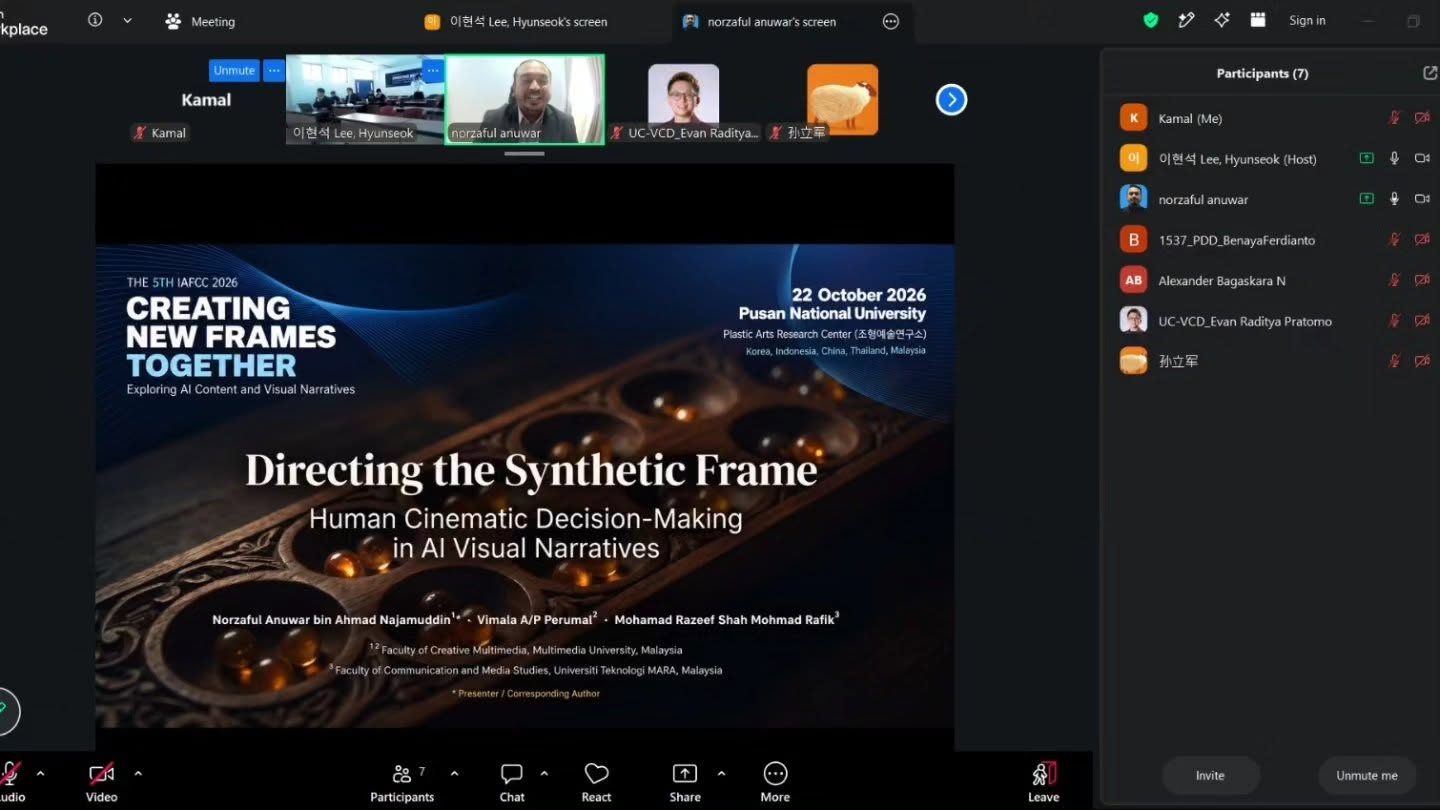
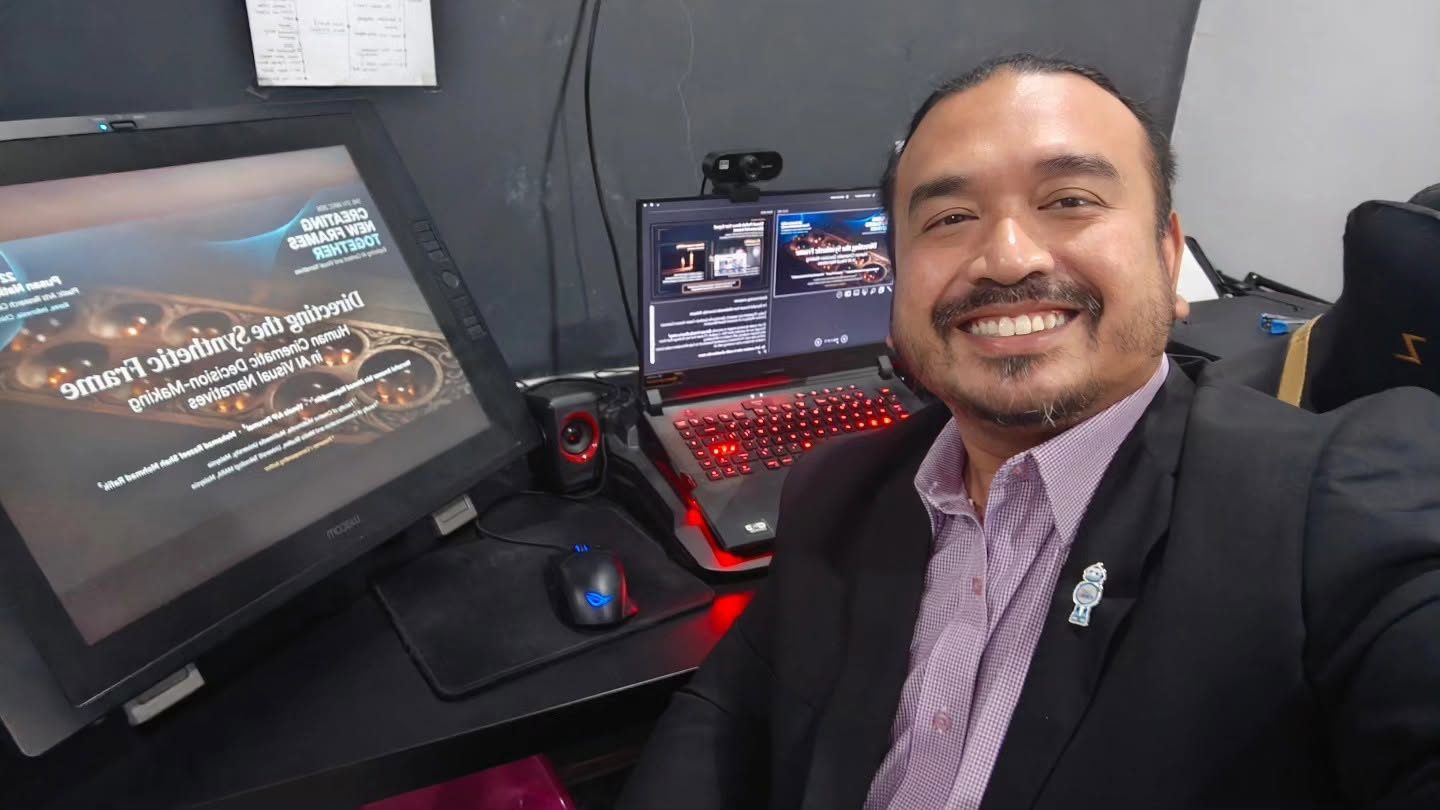
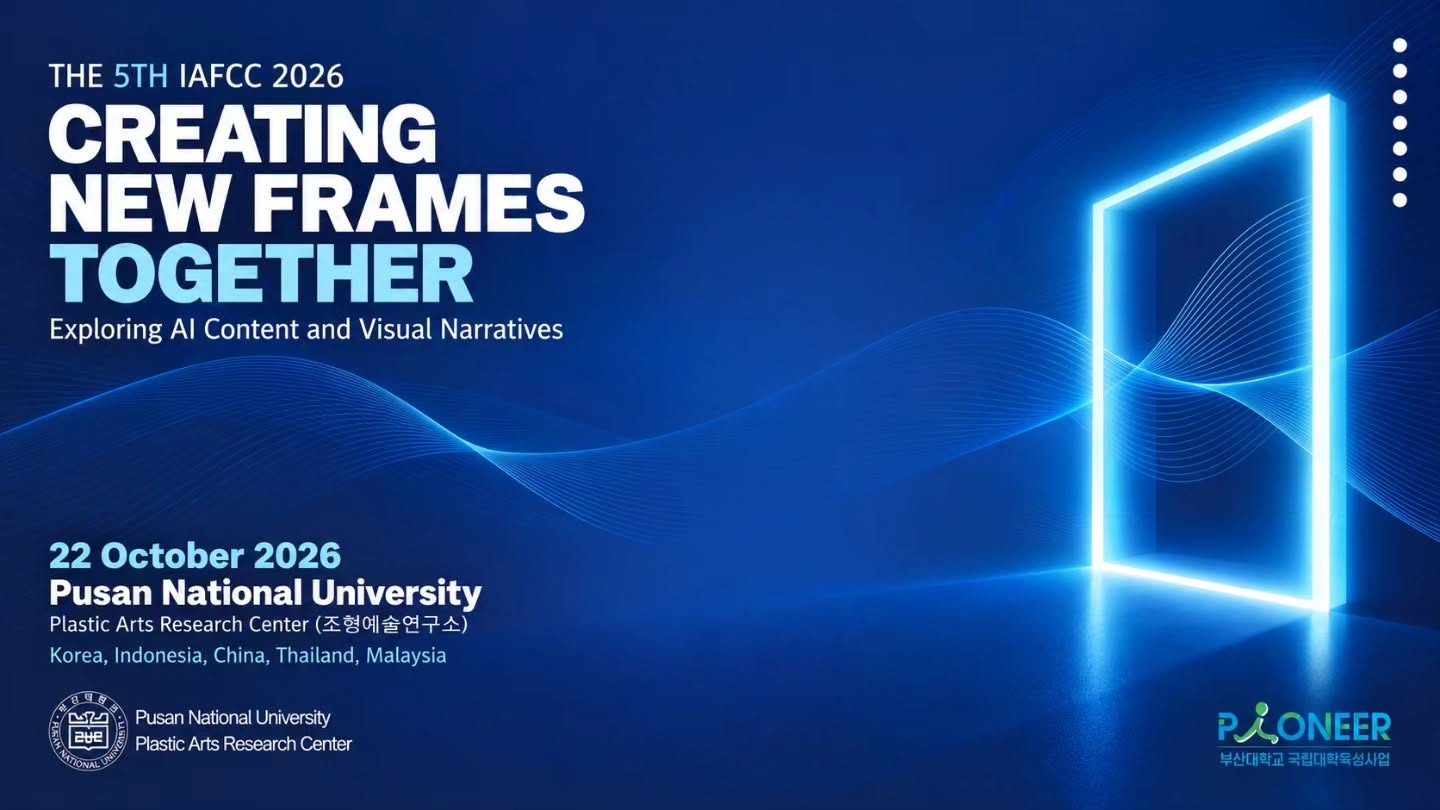
Hosted by the Plastic Arts Research Center at Pusan National University, IAFCC 2026 brought together researchers from Korea, Indonesia, China, Thailand and Malaysia around the theme Creating New Frames Together: Exploring AI Content and Visual Narratives.
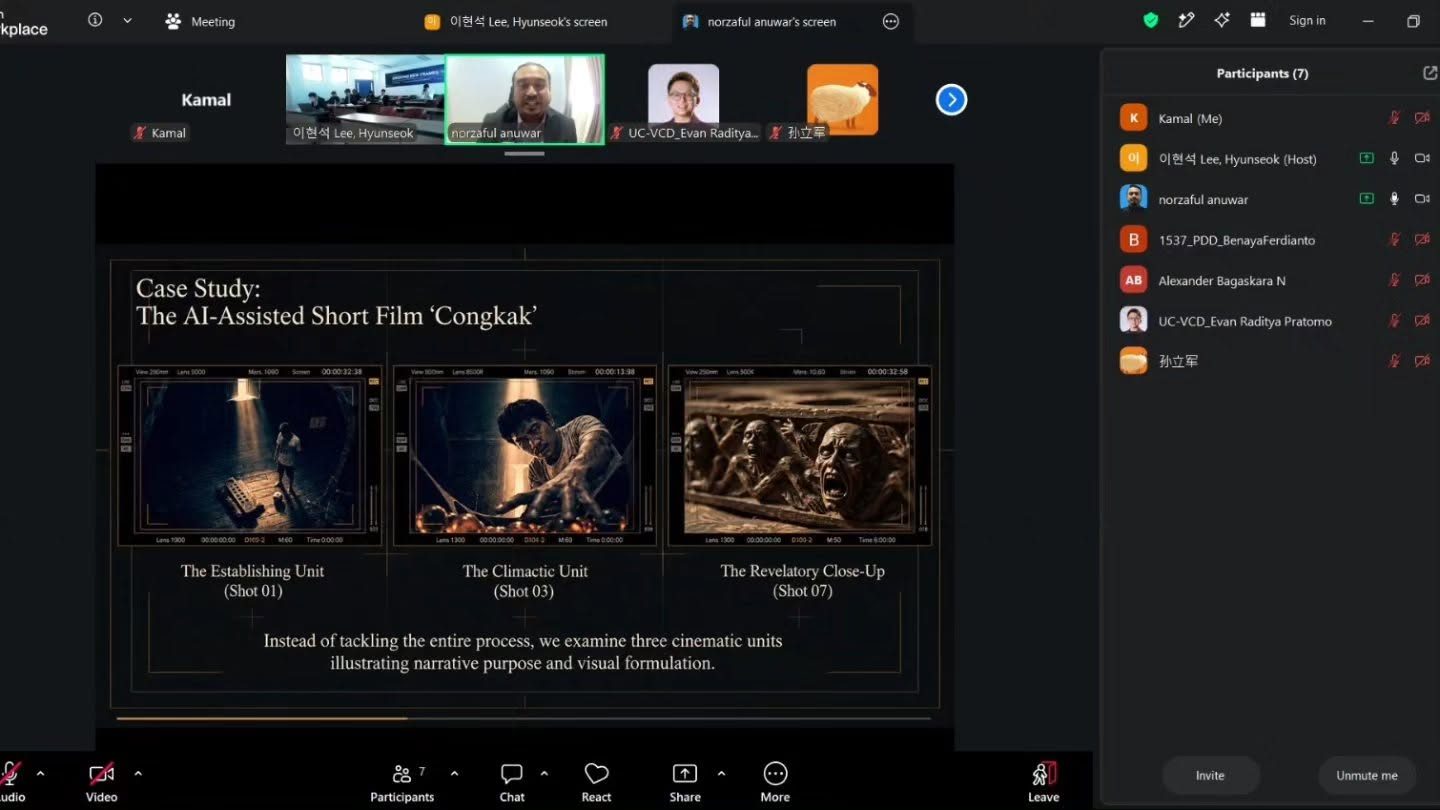
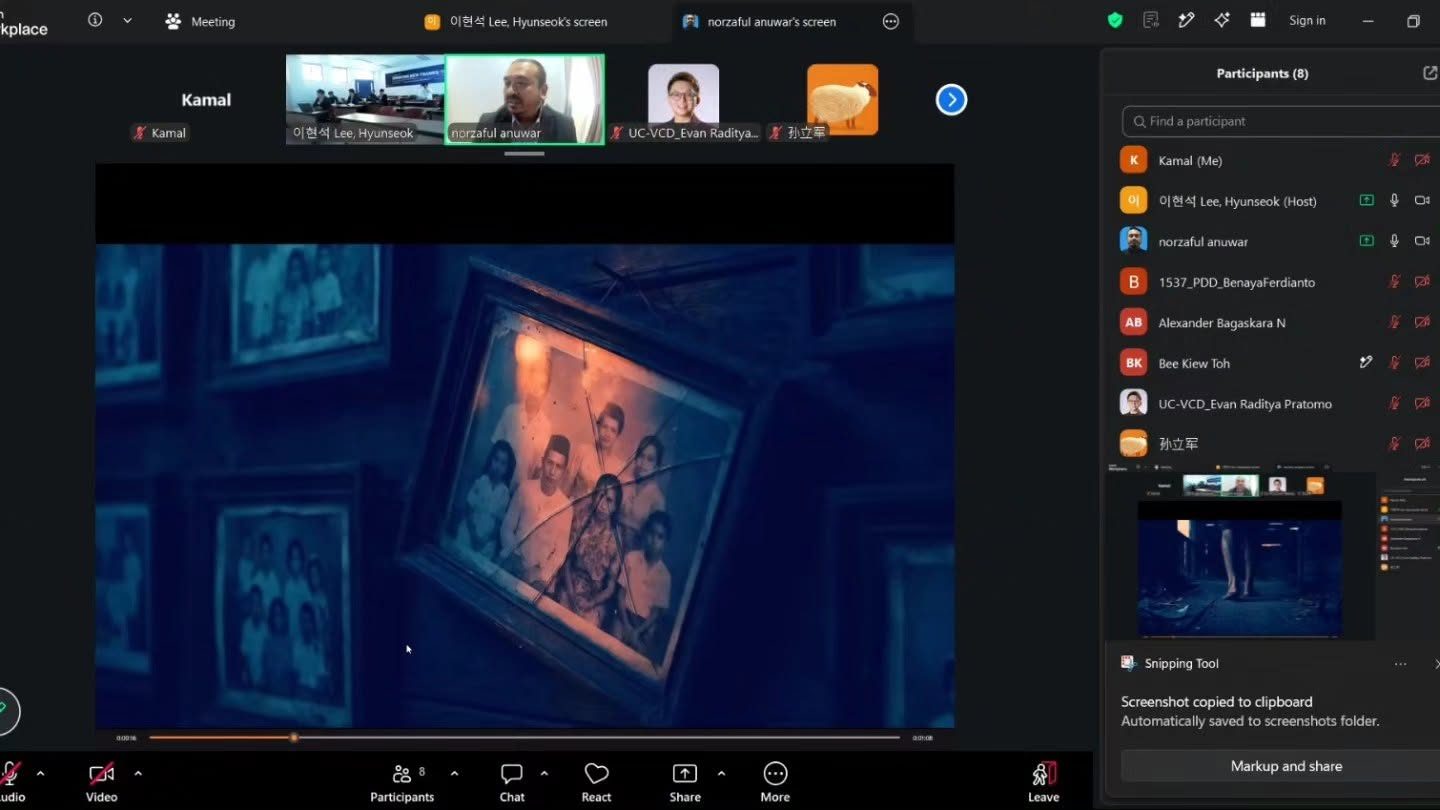
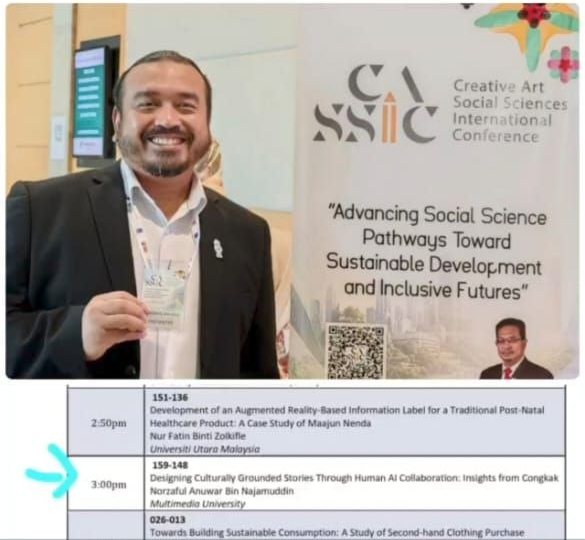
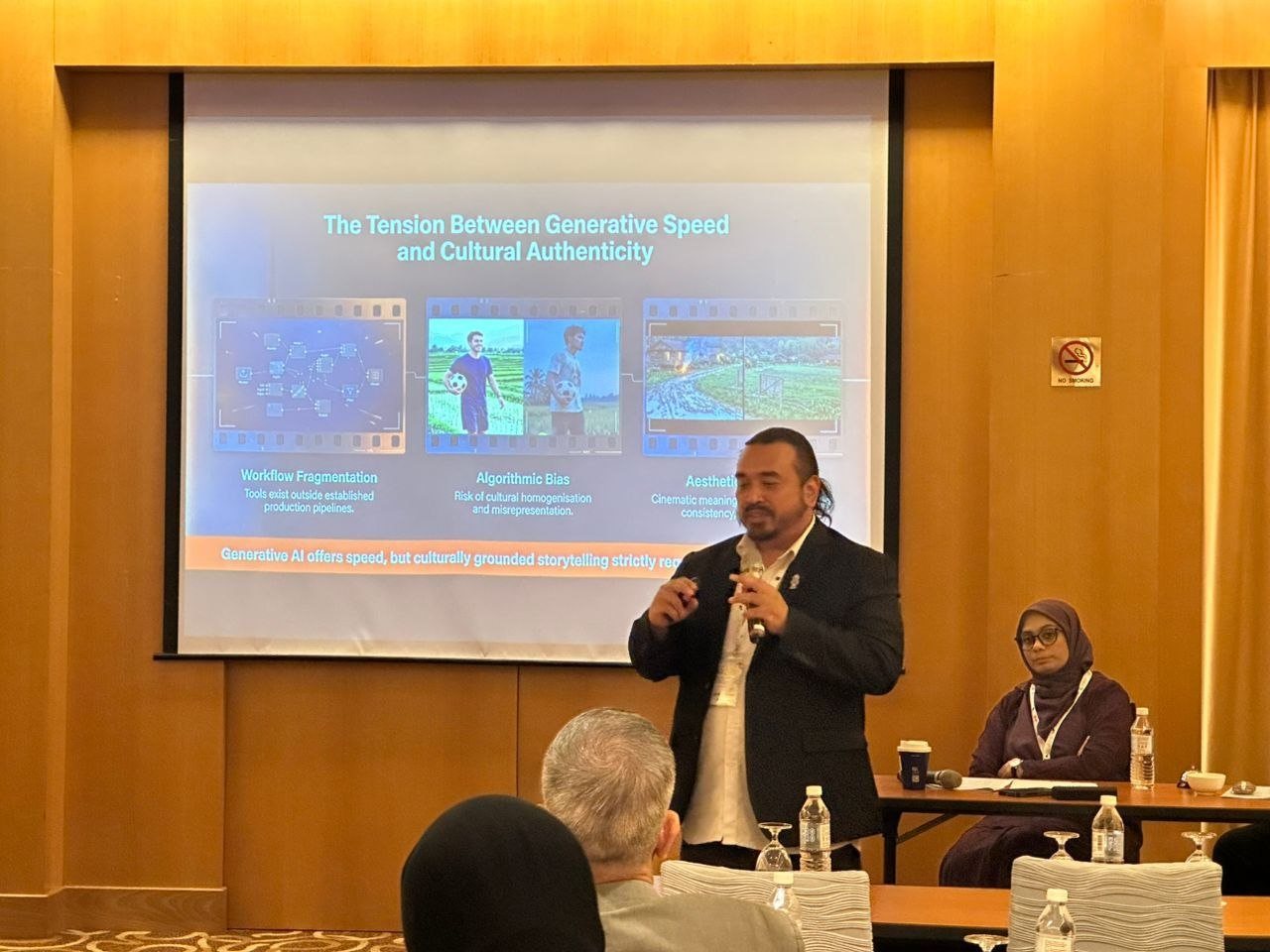
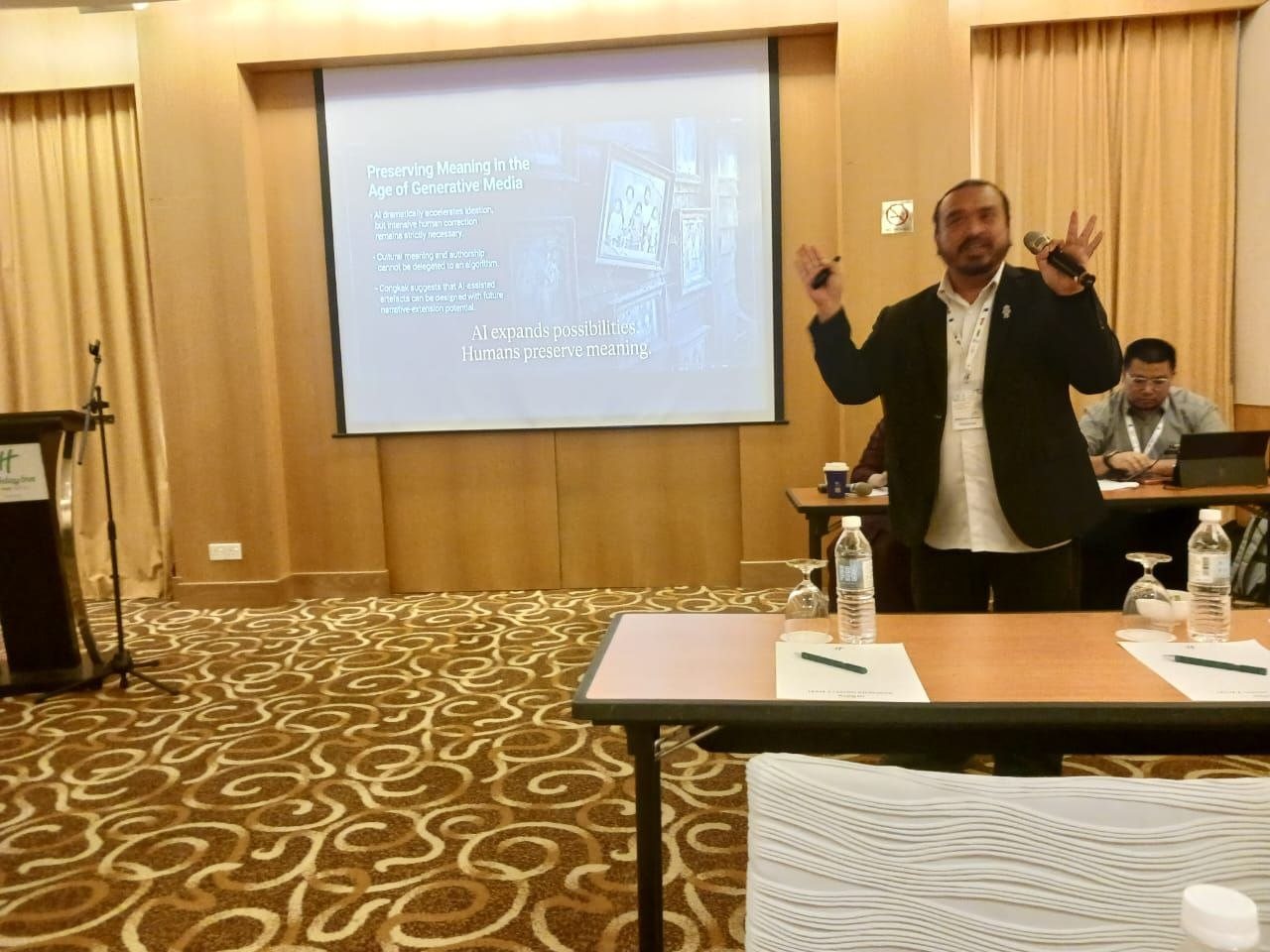
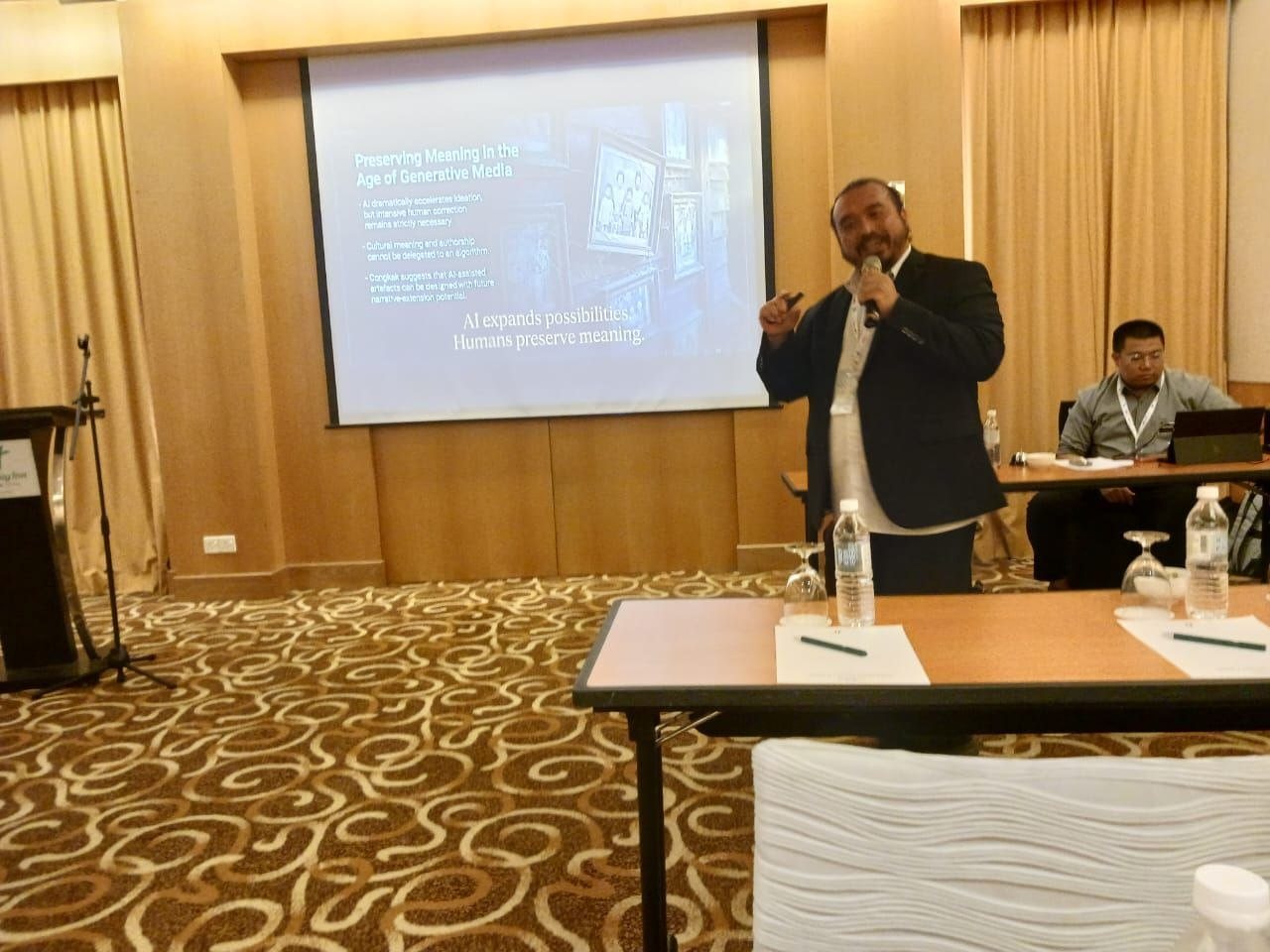
The paper looks at how human creativity and AI work together in visual storytelling, using the AI-assisted short film Congkak as a case study. Rather than tracing the whole production, it examines three cinematic units (the establishing unit, the climactic unit and the revelatory close-up) to show how human cinematic decisions shape narrative purpose and visual form.
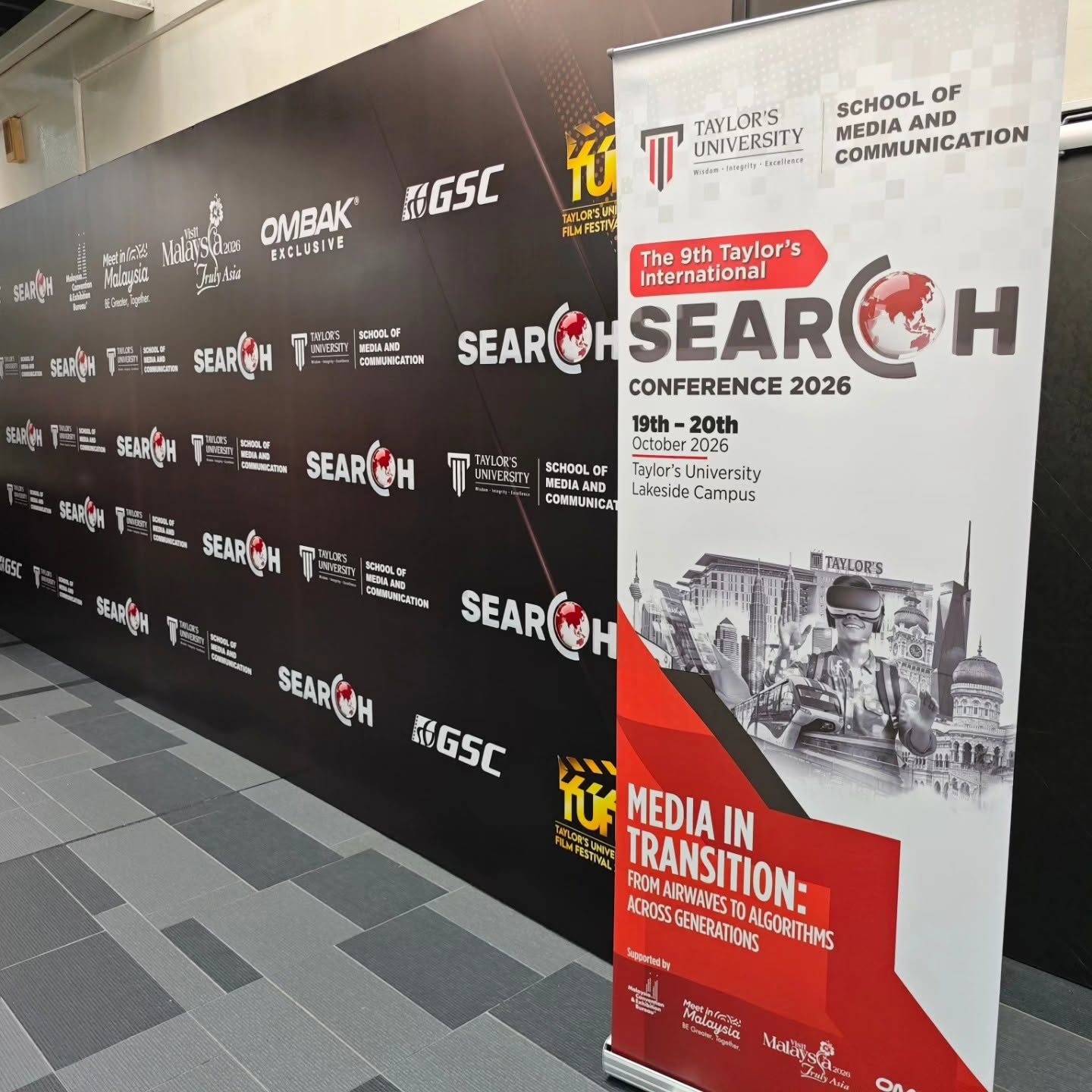
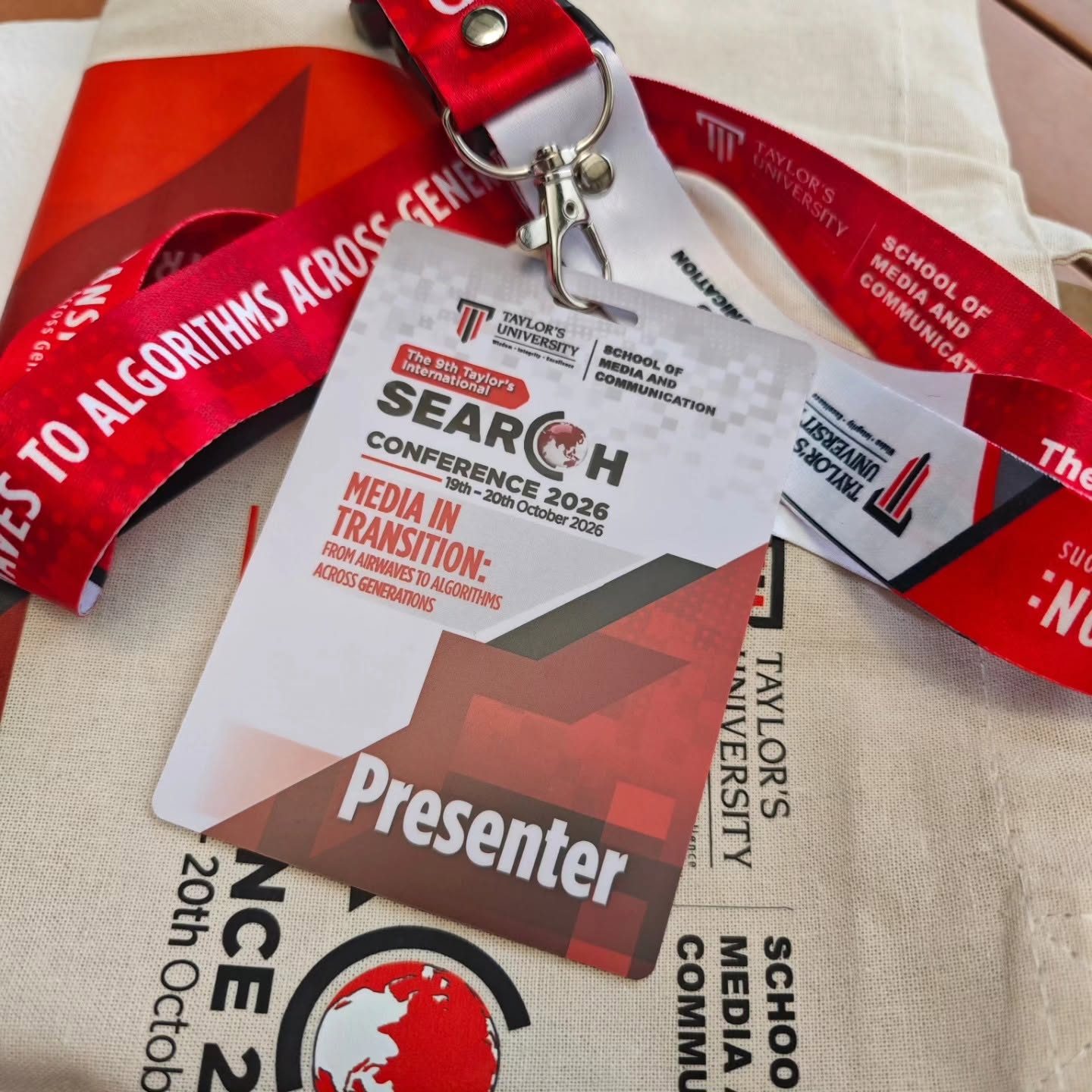
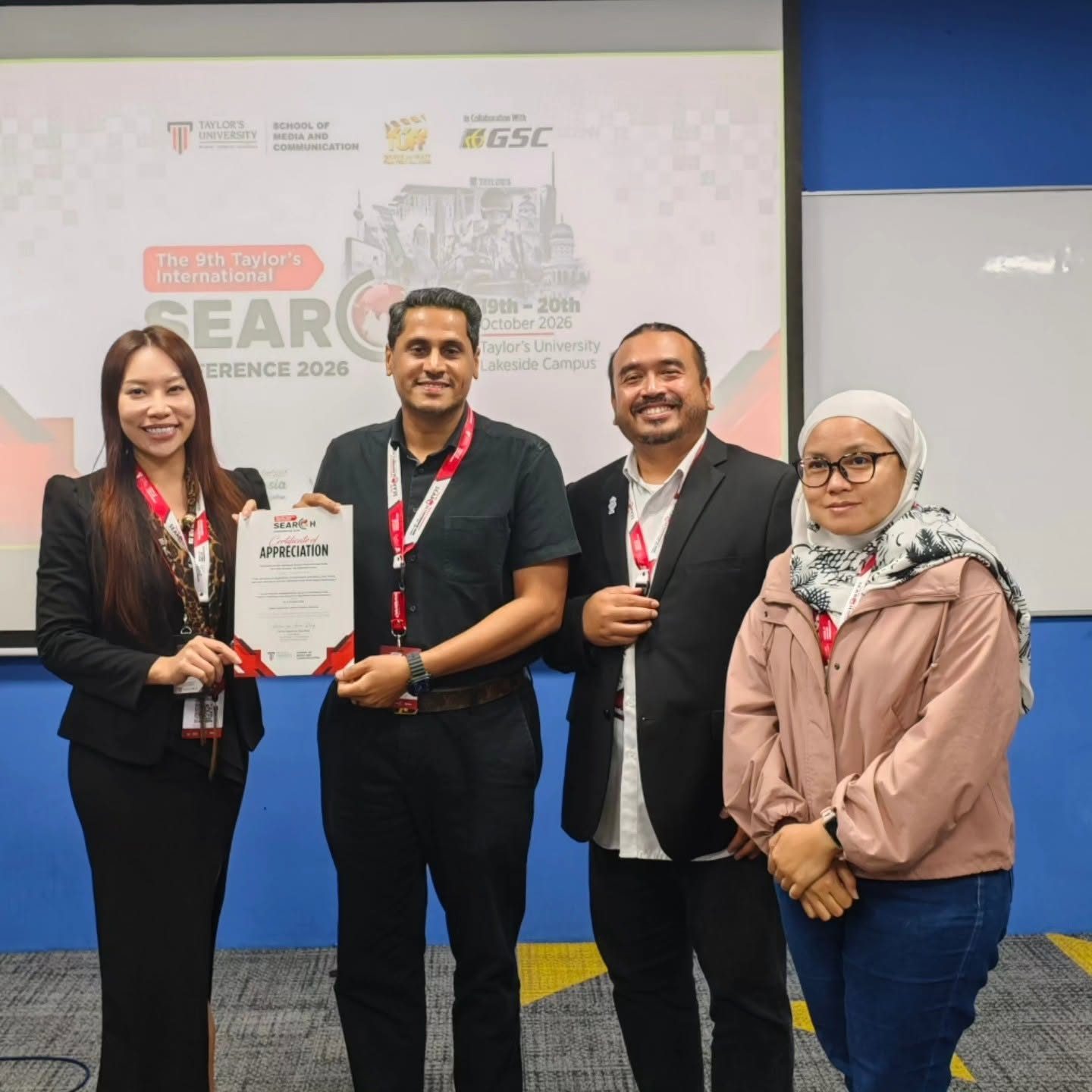
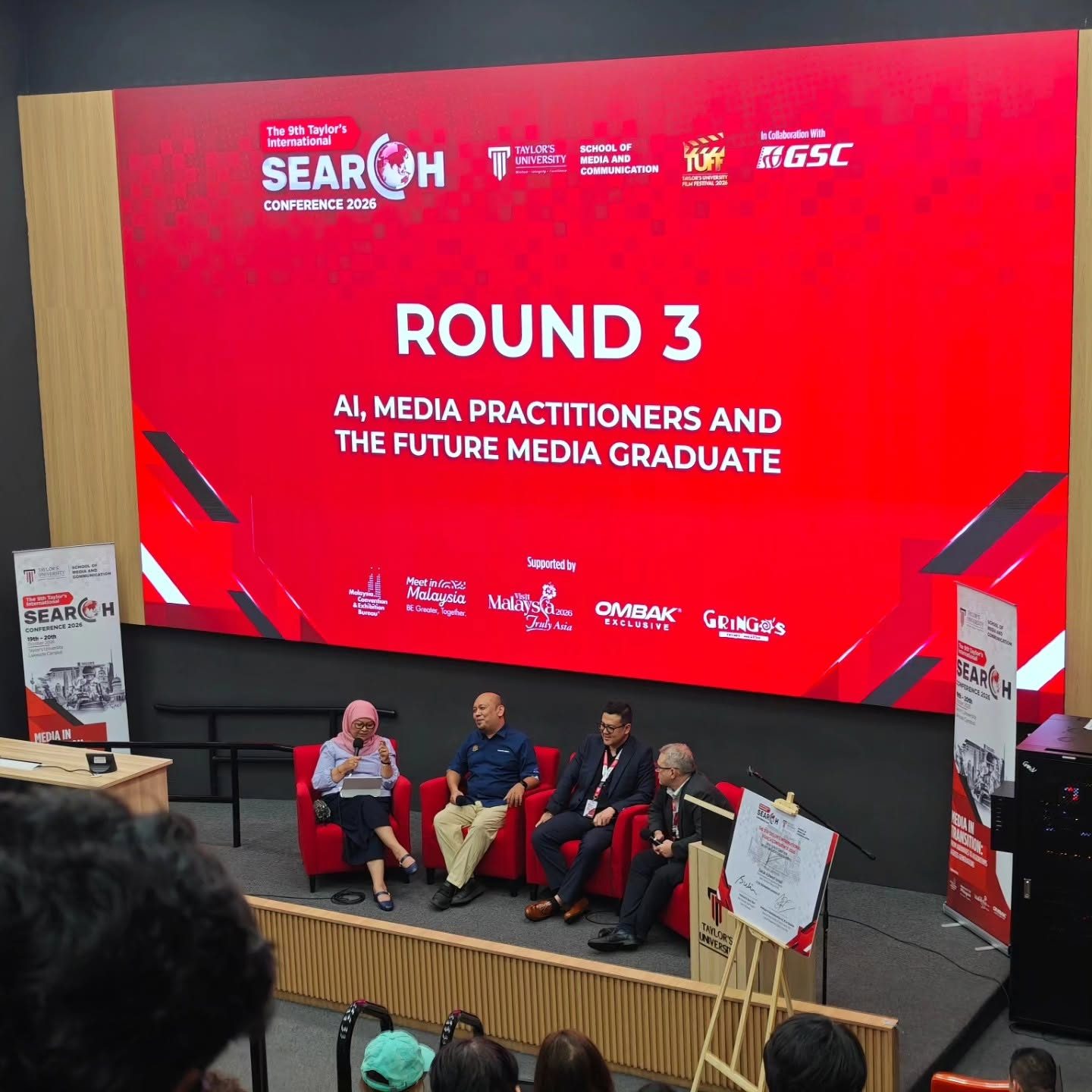
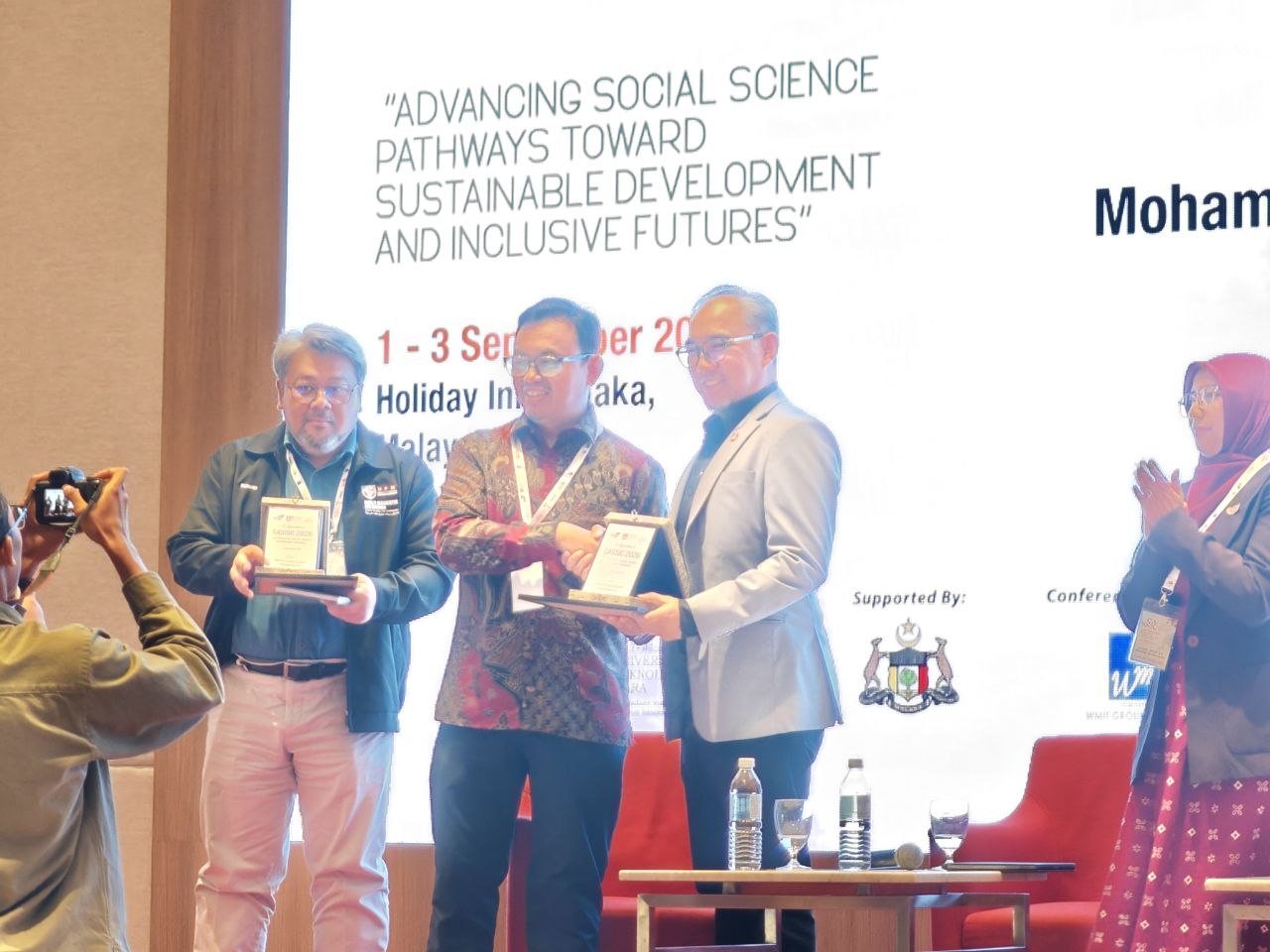
SEARCH brings together academics, researchers, industry professionals and students to look at how technology, artificial intelligence, digital platforms and changing audience habits are reshaping communication. The 2026 edition, themed Media in Transition: From Airwaves to Algorithms Across Generations, followed the shift from traditional broadcasting to data-driven, algorithmic media through keynotes, panels, research presentations and workshops.
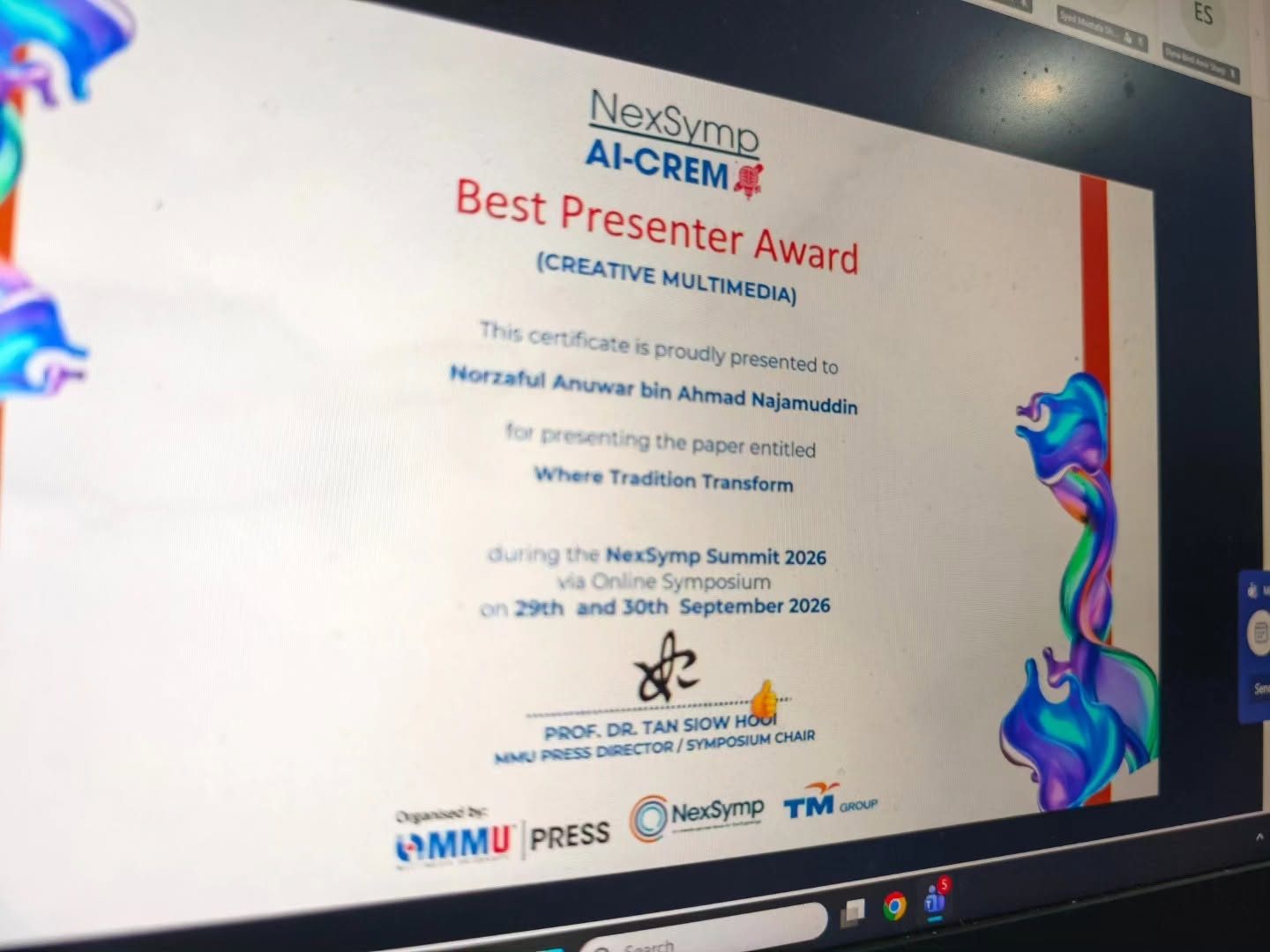
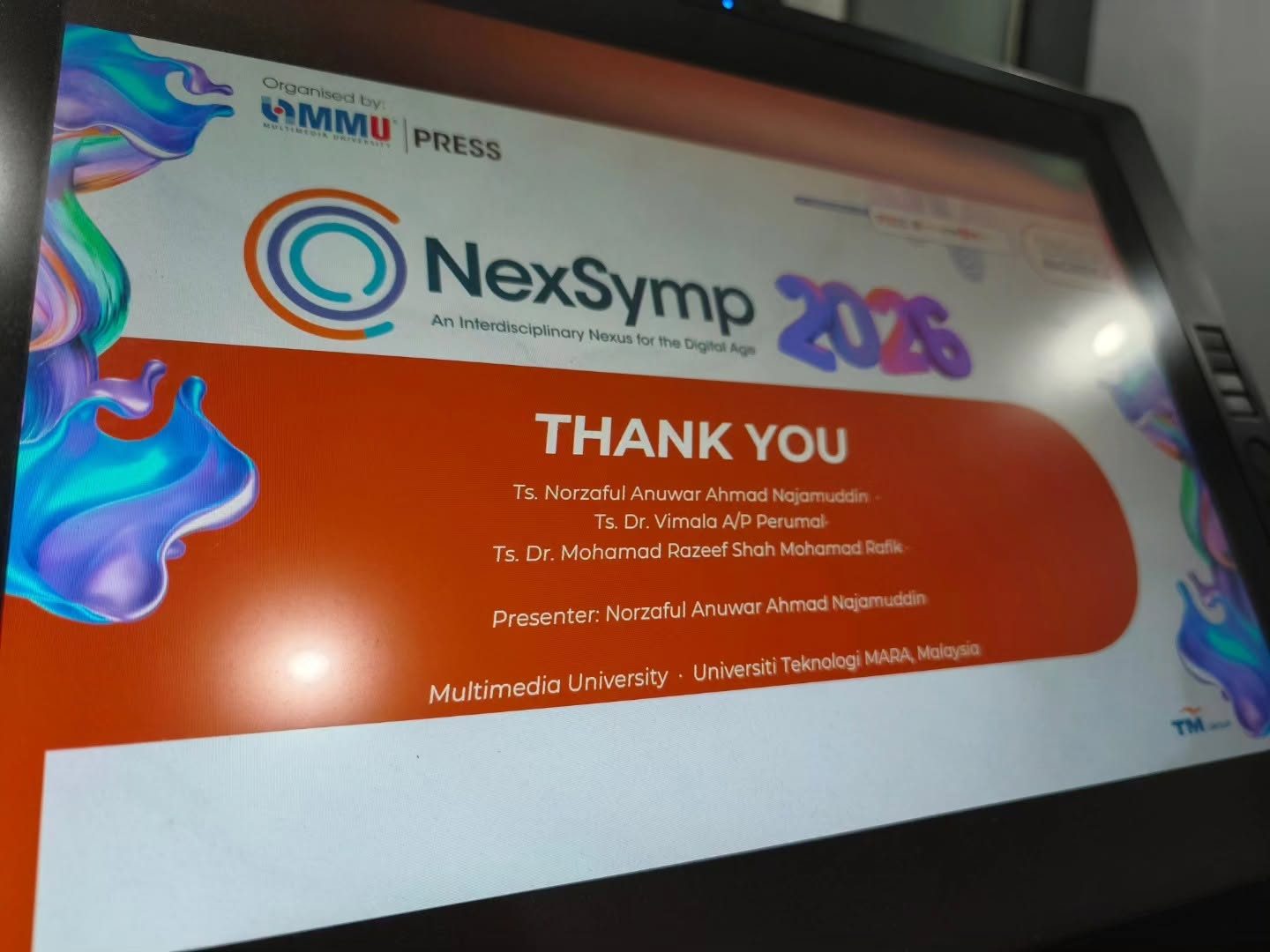
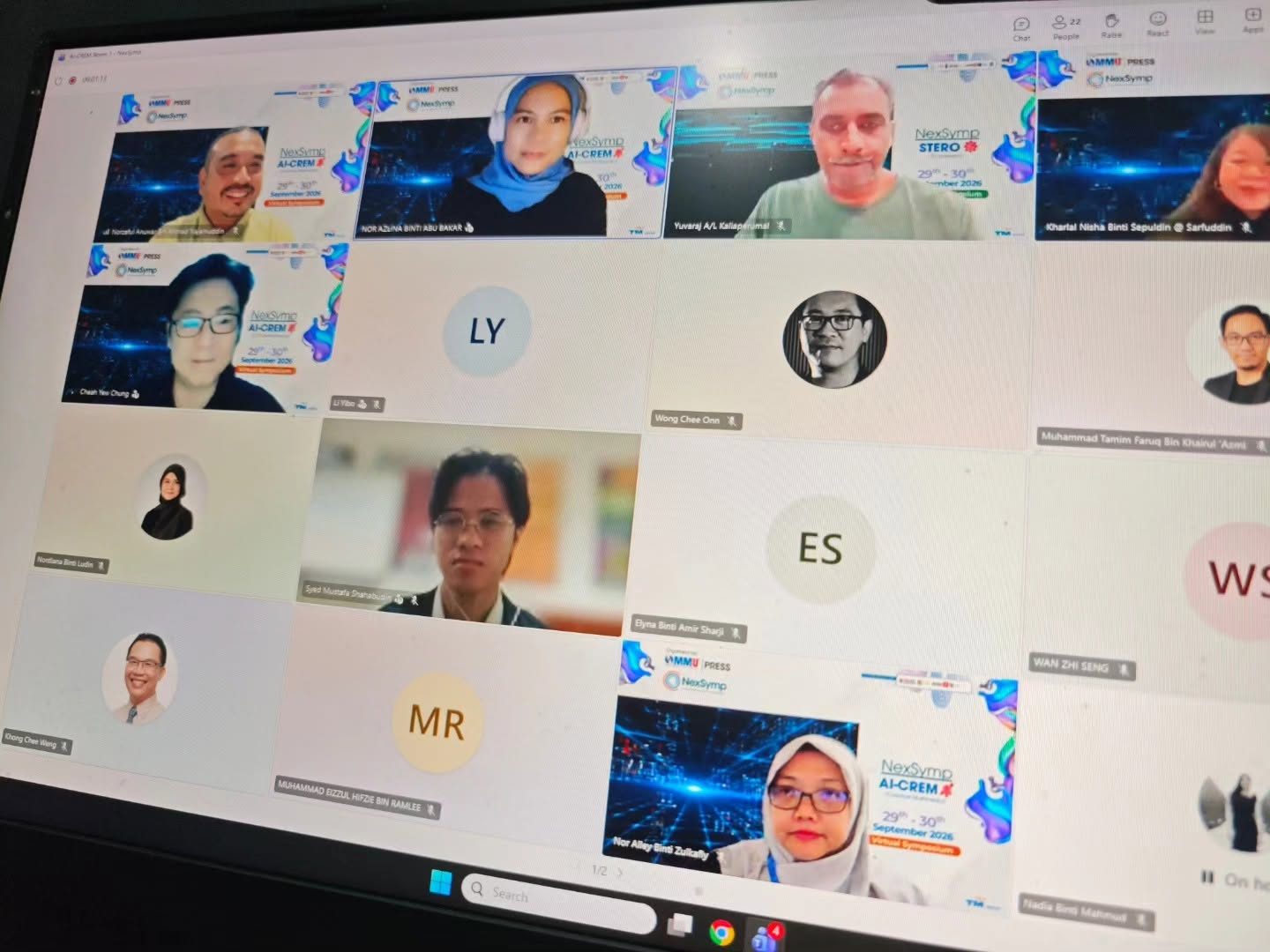
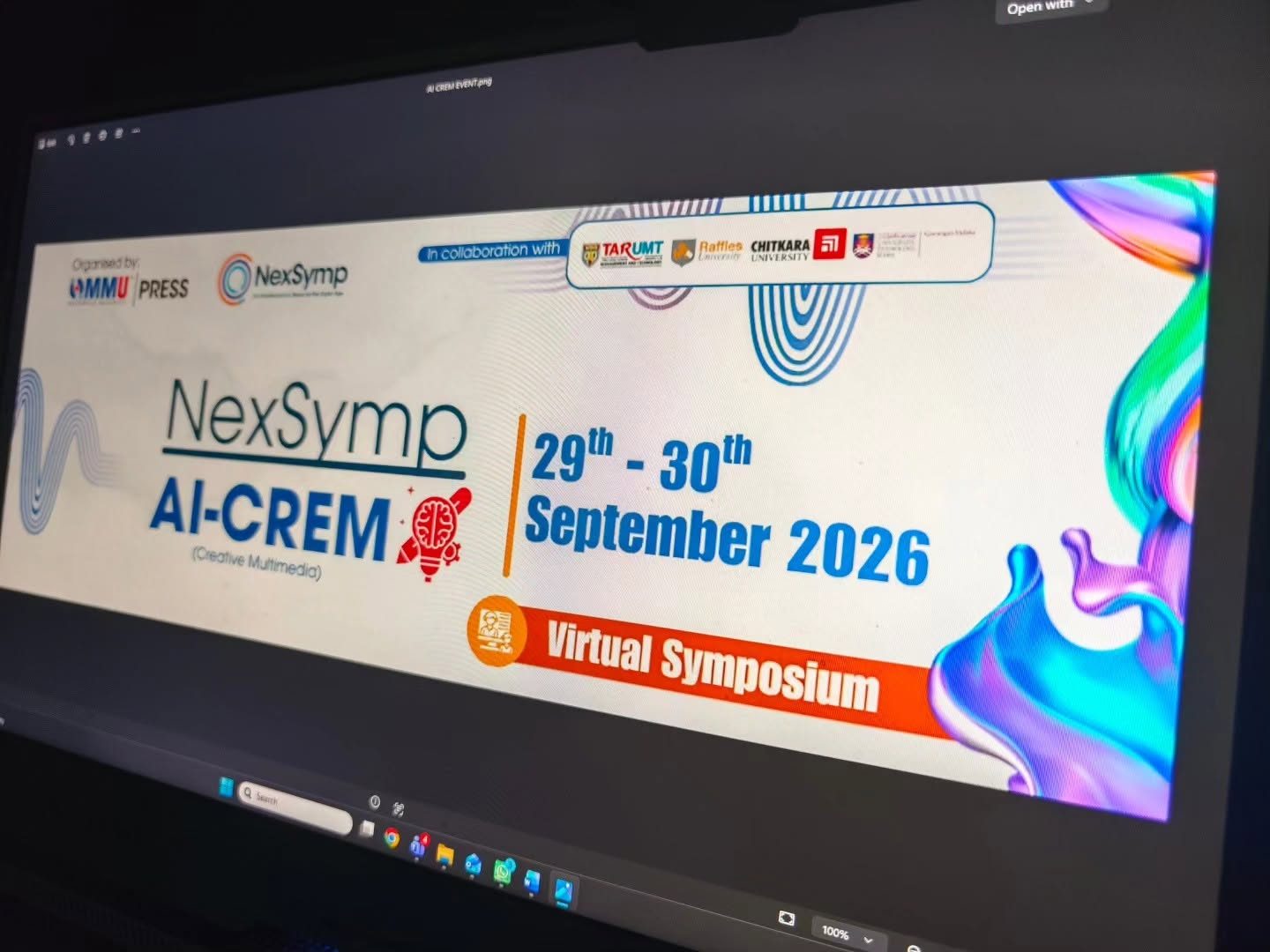
NexSymp, An Interdisciplinary Nexus for the Digital Age, is a virtual symposium run by MMU Press for research and innovation in artificial intelligence and its applications across fields. Its AI-CREM track focuses on creative multimedia, and the 2026 edition was held with partner universities including TAR UMT, Raffles University, Chitkara University and UiTM.
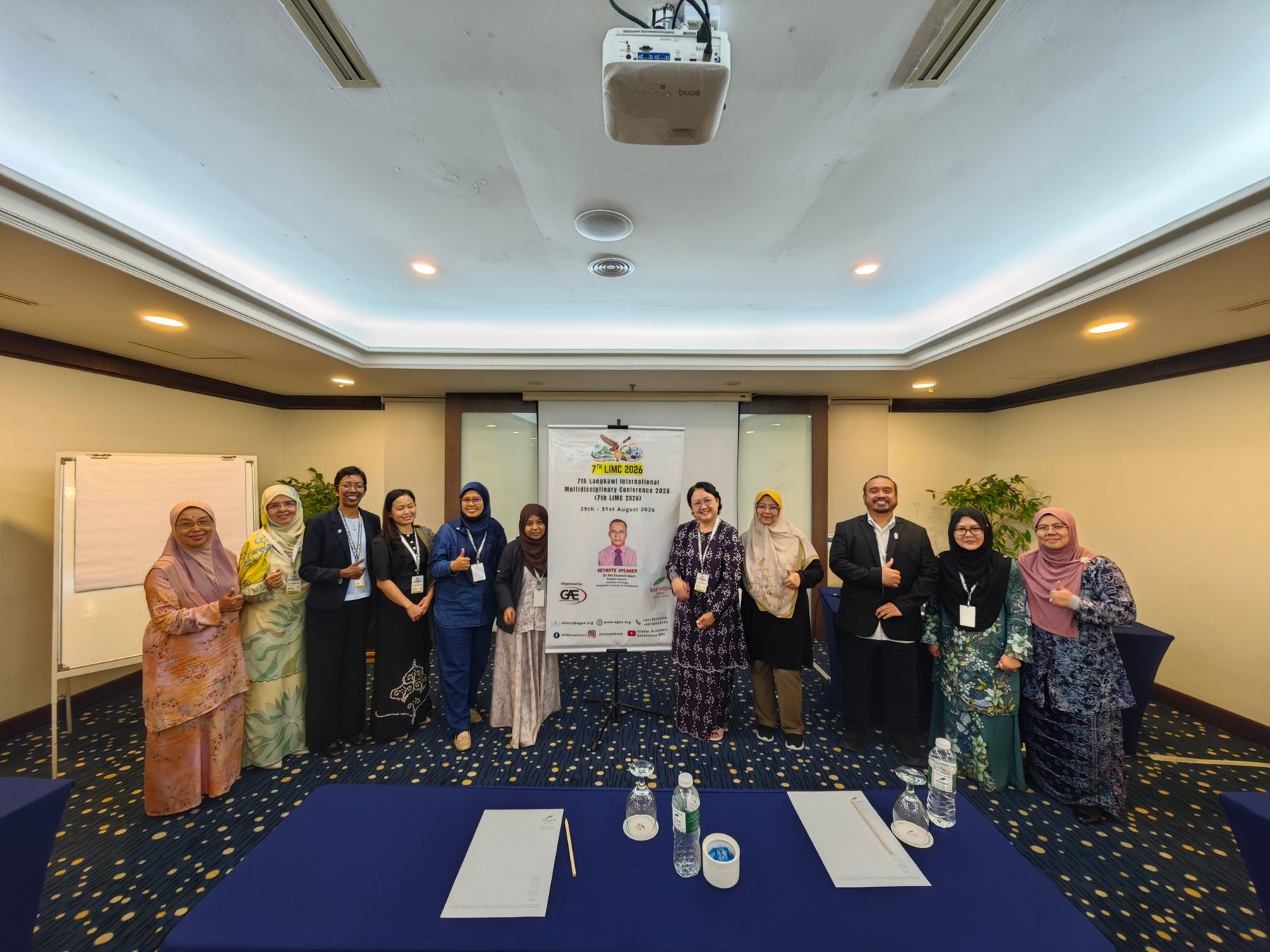
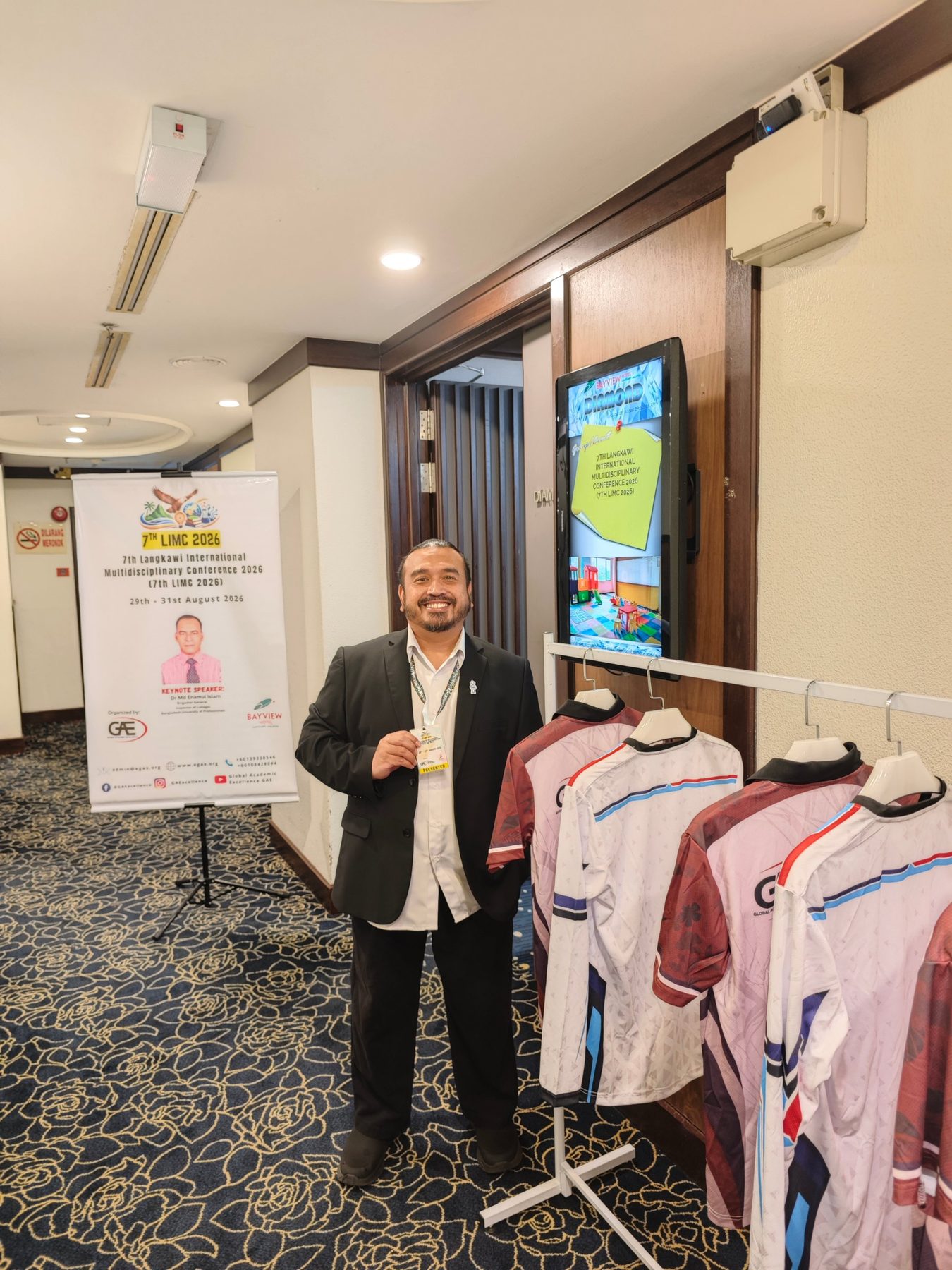
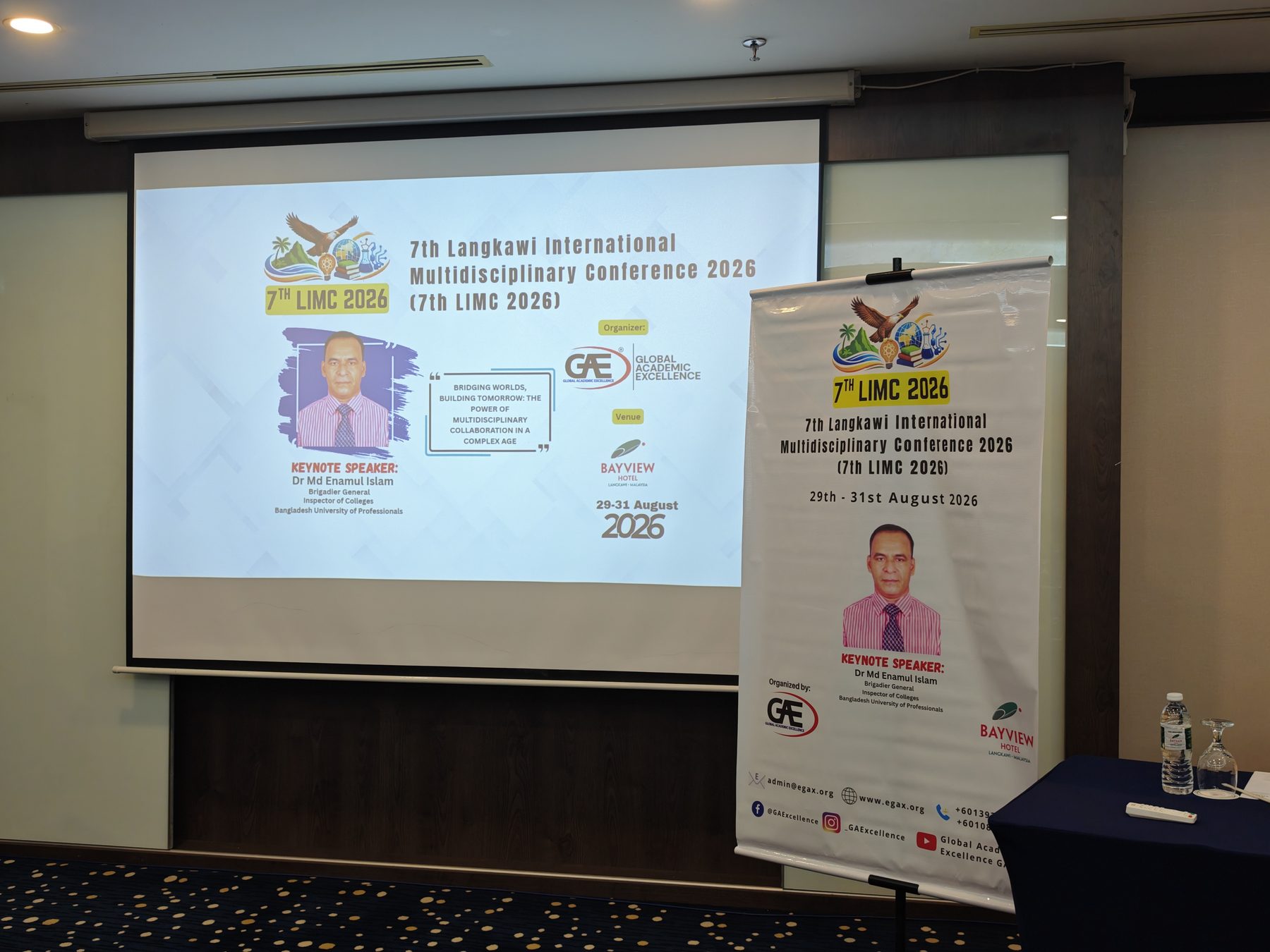
I presented Where Tradition Transforms in the Creative Multimedia session and received the Best Presenter Award for the track.
From 2020 to 2026, the rapid expansion of generative artificial intelligence has altered creative production in film, animation and digital media — speeding up visual development while raising new challenges around authorship, algorithmic bias and cultural representation. This study examines how human creativity and generative AI can collaborate to develop a culturally grounded narrative, and how that process can surface possibilities for narrative extension toward a future transmedia story world.
Using Congkak, an AI-assisted short film inspired by Malay folklore, as a bounded practice-based case, the research documents a hybrid production process that integrates conventional 3D pipelines (Autodesk Maya, Arnold) with generative AI tools, Adobe After Effects and Adobe Premiere Pro. AI is positioned not as a substitute for creative authorship but as an iterative, supportive technology for ideation, visualisation and production, while human judgement retains control over narrative meaning, cultural representation and worldbuilding. Production journals, prompt iterations, storyboards, workflow documentation and the completed film were analysed through reflective thematic analysis, workflow analysis and human–AI role analysis.
The findings delineate how creative labour is distributed between human and AI contributions, identify technical constraints affecting workflow and continuity, and examine the narrative and worldbuilding elements within Congkak that indicate transmedia potential — without claiming that transmedia expansion has already occurred. The study proposes a people-centred framework for AI-assisted creative storytelling, offering filmmakers, educators and researchers working across AI cinema, cultural heritage and transmedia development a practical way to think about extending narratives.
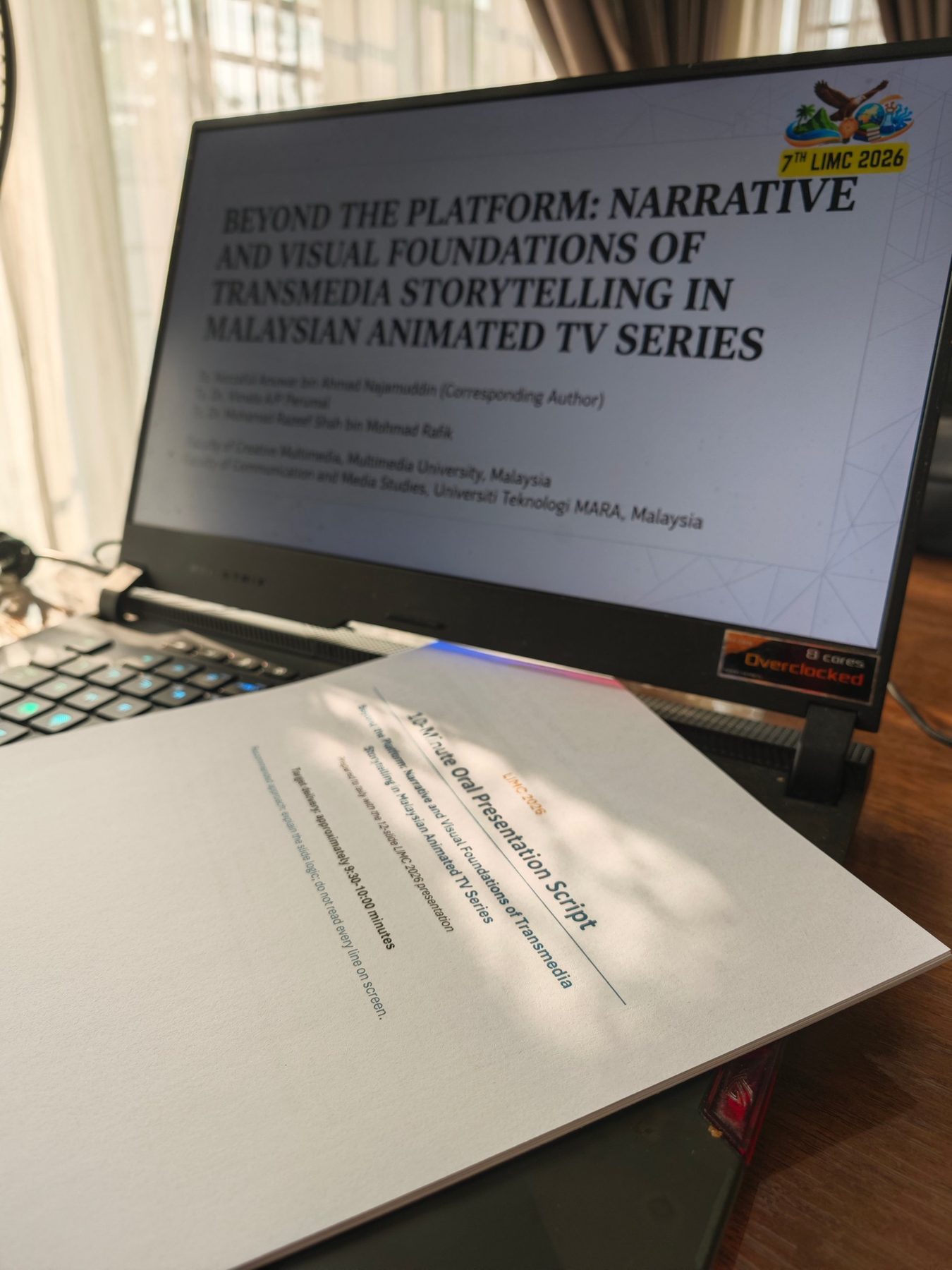
Transmedia storytelling is usually studied through how content spreads across platforms, with far less attention paid to the narrative and visual structures that make a television text capable of expanding in the first place. This paper examines the narrative and visual mechanisms built into three major Malaysian animated series — Upin & Ipin, BoBoiBoy Galaxy and Ejen Ali — that support and signal transmedia potential.
Using a comparative qualitative multiple-case design, nine purposively selected episodes (early, middle and final from each series) were analysed at the level of scene-based multimodal narrative units. Qualitative Content Analysis, supported by Visual Analysis, coded narrative, cultural, character, transmedia and visual elements across four themes: narrative worldbuilding, narrative progression, transmedia signals, and visual identity and aesthetic coherence.
The analysis identifies recurring mechanisms — seriality, foreshadowing, narrative gaps, character arcs, cultural worldbuilding, migratory cues, and extension axes for plot, character and world — and shows how they organise serial continuity, character attachment and narrative openness. Transmedia potential in Malaysian animated television rests largely on narrative architecture and visual coherence, well before any platform expansion. Cultural worldbuilding, seriality and foreshadowing stand out as the most consistent mechanisms. The paper argues that transmedia analysis should attend to these embedded textual conditions, offering an empirically grounded, Malaysian-specific perspective to transmedia scholarship.